Introduction: GH vs IGF-1
In recent years, we’ve seen a surge of interest in peptide therapies. It often feels as though a new peptide appears every week, each promising remarkable effects. Yet among all these compounds, two remain the most fundamental—and arguably the most versatile—of all: Growth Hormone (GH/HGH) and Insulin‑Like Growth Factor‑1 (IGF‑1).
Growth Hormone plays a central role in growth, repair, and tissue maintenance across the body. Many of its effects are indirect: GH functions systemically and triggers the release of various local growth factors in different tissues, which then carry out the work at the tissue level.
One of the most important mediators is IGF‑1. Because IGF‑1 transmits many of GH’s tissue‑building (anabolic) effects, it is often called GH’s primary anabolic mediator. GH stimulates IGF‑1 production both locally (autocrine/paracrine) and systemically—most notably from the liver and kidneys—where IGF‑1 exerts broad anabolic and metabolic effects.
Clinically, this relationship is so central that physicians commonly assess GH activity by measuring IGF‑1 levels rather than GH itself, underscoring IGF‑1’s pivotal mediating role.
Despite this close link, GH and IGF‑1 are not interchangeable. They are distinct hormones with different timelines, mechanisms, and roles—designed to work together rather than in competition.
While IGF‑1 is often described as the main anabolic mediator of GH, that simplification overlooks a crucial point:
GH is a systemic regulator that orchestrates multiple growth pathways—many of which operate independently of IGF‑1.
Understanding this distinction helps explain why GH and IGF‑1 form a uniquely complementary—and metabolically balanced—pair.
Metabolic Interaction: Why the Combination Matters
GH and IGF‑1 have strikingly different effects on glucose metabolism.
- GH has a hyperglycemic effect. It raises blood glucose by increasing hepatic glucose production and reducing peripheral insulin sensitivity. In simple terms: GH can raise blood sugar, forcing the pancreas to secrete more insulin to maintain balance. Chronically elevated insulin demand can reduce insulin sensitivity—a key early marker of metabolic dysfunction.
- IGF‑1 acts in the opposite direction. Functionally similar to insulin in many respects, IGF‑1 enhances glucose uptake into tissues, lowers circulating blood glucose, and reduces the workload on the pancreas. By doing so, IGF‑1 helps preserve—and often improve—insulin sensitivity.
Insulin sensitivity is central to optimal metabolism. It governs nutrient partitioning toward muscle, energy utilization, recovery efficiency, and overall metabolic health.
So: GH creates metabolic demand; IGF‑1 balances it. When combined, they replicate natural endocrine physiology far more closely than when either is used alone.
Short on time? Skip to the protocols at the end. Want the mechanism? Keep reading—below I summarize what each hormone does and how they interact.
GH: The Systemic Orchestrator
GH is not merely a “muscle‑building hormone.” It is a global regulator of tissue maintenance, repair, and metabolic flexibility throughout life.
Key systemic effects of GH:
- Increased lipolysis and fat oxidation
- Mobilization of energy substrates during fasting and stress
- Regulation of tissue turnover in muscle, connective tissue, skin, and bone
- Stimulation of multiple local growth factors—not only IGF‑1
GH functions as an upstream signal, priming tissues to adapt, repair, and respond to both mechanical and metabolic stress.
GH as a Local Growth‑Factor Trigger (Beyond IGF‑1)
Besides stimulating hepatic IGF‑1 production, GH enhances local growth‑factor signaling in tissues—especially when paired with training, mechanical loading, or injury repair.
In muscle, tendons, ligaments, and skin, GH promotes:
- Local IGF‑1 expression (autocrine/paracrine)
- Activation of connective‑tissue regulators such as: TGF‑β (matrix formation and collagen deposition), FGF (remodeling and structural organization), PDGF (cellular recruitment and early repair), and VEGF (angiogenesis and perfusion)
These pathways explain why GH often improves joint comfort, tendon resilience, and skin quality before visible muscle hypertrophy occurs. Put simply: GH improves the environment in which tissue adapts.
IGF‑1: The Precision Anabolic and Metabolic Modulator
By contrast, IGF‑1 is a direct effector at the tissue level.
Primary roles of IGF‑1:
- Stimulates protein synthesis
- Enhances collagen production
- Promotes muscle‑fiber hypertrophy
- Improves glucose uptake and insulin sensitivity
- Reduces protein catabolism
IGF‑1 exerts more immediate, localized anabolic effects—particularly in skeletal muscle and connective tissue—and acts as a metabolic counterbalance to GH.
Tissue‑Specific Complementarity
Muscle: GH primes satellite cells and recovery pathways; IGF‑1 drives hypertrophy and protein accretion. Together: improved size, density, and recovery.
Tendons & ligaments: GH enhances matrix turnover, angiogenesis, and resilience; IGF‑1 stimulates collagen synthesis and structural repair. Together: stronger, more adaptable connective tissue.
Skin: GH supports dermal thickness and turnover; IGF‑1 promotes fibroblast activity and collagen production. Together: improved elasticity and texture.
Why GH Feels “Subtle” and IGF‑1 Feels “Direct”
Many users report:
- GH effects are gradual, systemic, and restorative
- IGF‑1 effects are localized, anabolic, and performance‑oriented
This matches physiology: GH sets the stage; IGF‑1 executes the growth. Neither fully replaces the other.
Practical Perspective: Harmony Over Choice
Instead of asking “IGF‑1 or GH?”, a better question is: How do we let GH orchestrate growth while allowing IGF‑1 to execute it efficiently?
Used together, they:
- Enhance anabolic outcomes
- Improve metabolic health
- Reduce long‑term insulin stress
- Support connective tissue and recovery—not just muscle size
Practical Protocols: GH and IGF‑1 Combined Use
Note: Dosages and protocols vary by age, body composition, training status, and metabolic health. These are general guiding frameworks for educational purposes only—not medical advice.
Bodybuilding & Muscle Growth Focus
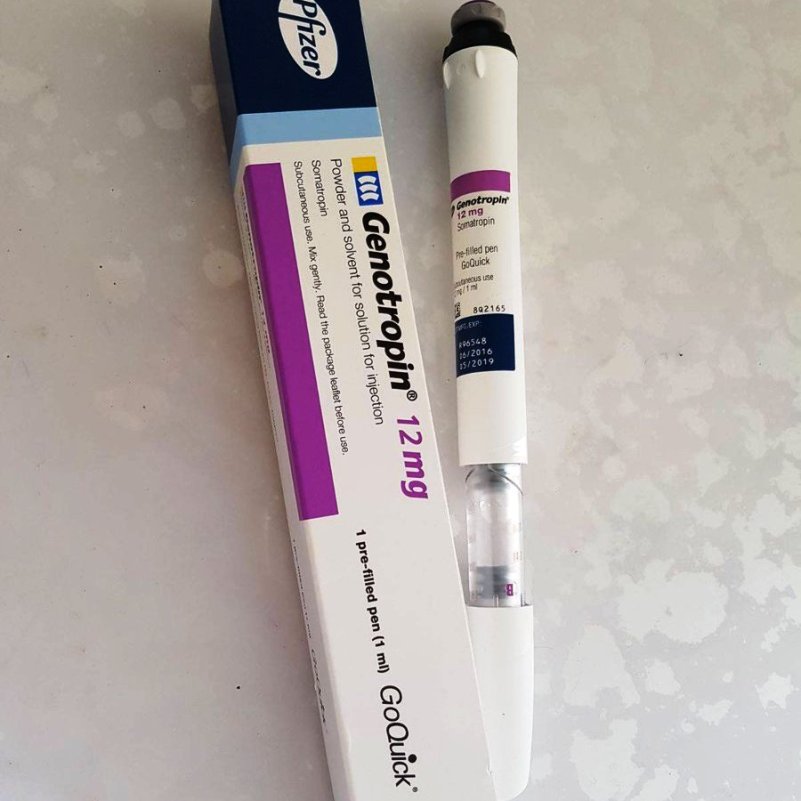
HGH
- 4 IU per day, divided into 2 daily doses
- Minimum duration: 12 weeks
- May be run long term under medical supervision
IGF‑1 LR3
- 4 weeks on / 4 weeks off
- 50–100 mcg daily
- Administered pre‑training or before the largest meal of the day
This approach uses GH for systemic recovery, fat mobilization, and tissue conditioning while IGF‑1 drives localized anabolic signaling and nutrient uptake.
Hormone Replacement / Longevity‑Oriented Use
HGH
- 3 IU per day, divided into 2 daily doses
- Year‑round use or minimum 16 weeks
IGF‑1 LR3
- 15–25 mcg daily
- 8 weeks on / 4 weeks off
- During off periods, consider metabolic support (e.g., insulin sensitizers)
This framework emphasizes metabolic balance, connective‑tissue health, and long‑term recovery rather than aggressive hypertrophy.
Final Takeaway
Growth Hormone and IGF‑1 are distinct, complementary, and interdependent. GH provides systemic coordination and tissue readiness; IGF‑1 delivers precision growth and metabolic balance. Together, they recreate a more complete and physiologic growth environment than either hormone alone. This mutual potentiation—not dominance of one over the other—is what drives optimal long‑term adaptation.
If you want, I can: add PubMed citations, produce a short summary for social, or create an SEO‑optimized headline and meta description.